Pull up the numbers for Northwest Bakersfield and Southwest Bakersfield side by side and you'll see something that shouldn't happen. In the northwest, the median sale price slipped about 1 percent from the year before, while the price per square foot climbed nearly 4 percent over the same stretch. In the southwest, it's the mirror image: the median sale price jumped almost 5 percent, while the price per square foot dropped more than 6 percent. Two corridors, four numbers, and every pair pointing in opposite directions from each other.
If you're comparing these two parts of Bakersfield because you're planning a move up from your current house, this is the moment to stop and ask what's actually happening underneath those headlines. A falling median doesn't necessarily mean a corridor is softening. A rising median doesn't necessarily mean a corridor is appreciating. Sometimes it just means the mix of homes selling has changed, and once you understand why, the whole comparison starts to make a lot more sense.
Two Corridors, Two Contradictions
Here's the pattern from earlier this year, drawn from Redfin's neighborhood-level data for the two corridors. In Northwest Bakersfield, the median sale price came in around $455,000, down from the year before, while the median price per square foot ran about $247, up from the year before. In Southwest Bakersfield, the median sale price landed near $390,000, up from the year before, while the median price per square foot sat around $224, down from the year before.
Normally median price and price per square foot move together. When they split apart like this, in opposite directions in two adjacent corridors, it's a signal that the mix of what's selling has shifted, not that the underlying value of a square foot of Bakersfield has changed direction twice in one year.
Zoom out to the county level and the picture as of this September looks steady rather than dramatic. Kern County's median listing price sat at $409,500, a slight step down from $410,000 the month before, with active listings easing to 2,157 from 2,166. Mortgage rates held close to flat too, with the 30-year fixed around 6.66 percent and the 15-year around 5.98 percent. None of that county-wide calm explains why two corridors five miles apart would tell such different stories. The explanation lives closer to the ground, in what's actually going up for sale in each place.
What's Actually Selling Underneath the Median
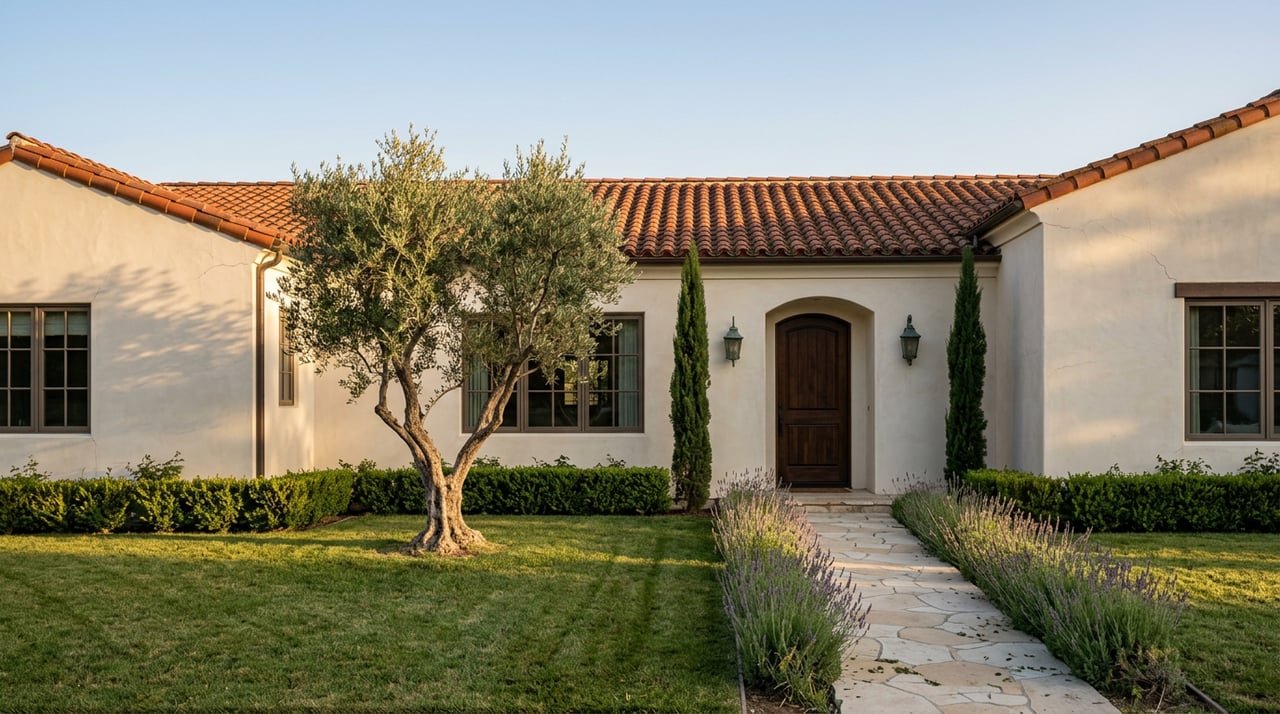
Start with the northwest. A meaningful share of new construction there comes from compact, efficient floorplans built without HOA dues. K. Hovnanian's Aspire at Davis Ranch offers homes up to 2,267 square feet on oversized homesites, and its sister community, Aspire at The Trails, runs even smaller, with single-story plans topping out around 1,792 square feet. New construction on smaller footprints tends to carry a higher price per square foot than an older resale home of the same total price, because the buyer is paying for modern systems, current finishes, and warranty coverage on every foot rather than getting more square footage for the same money.
That's a plausible reason the northwest's price per square foot climbed even while its median sale price eased. If more of what sold was newer and smaller rather than older and larger, the median total price can drift down while the cost of each square foot goes up. You're not looking at a corridor losing value. You're looking at a corridor where the mix of product changed.
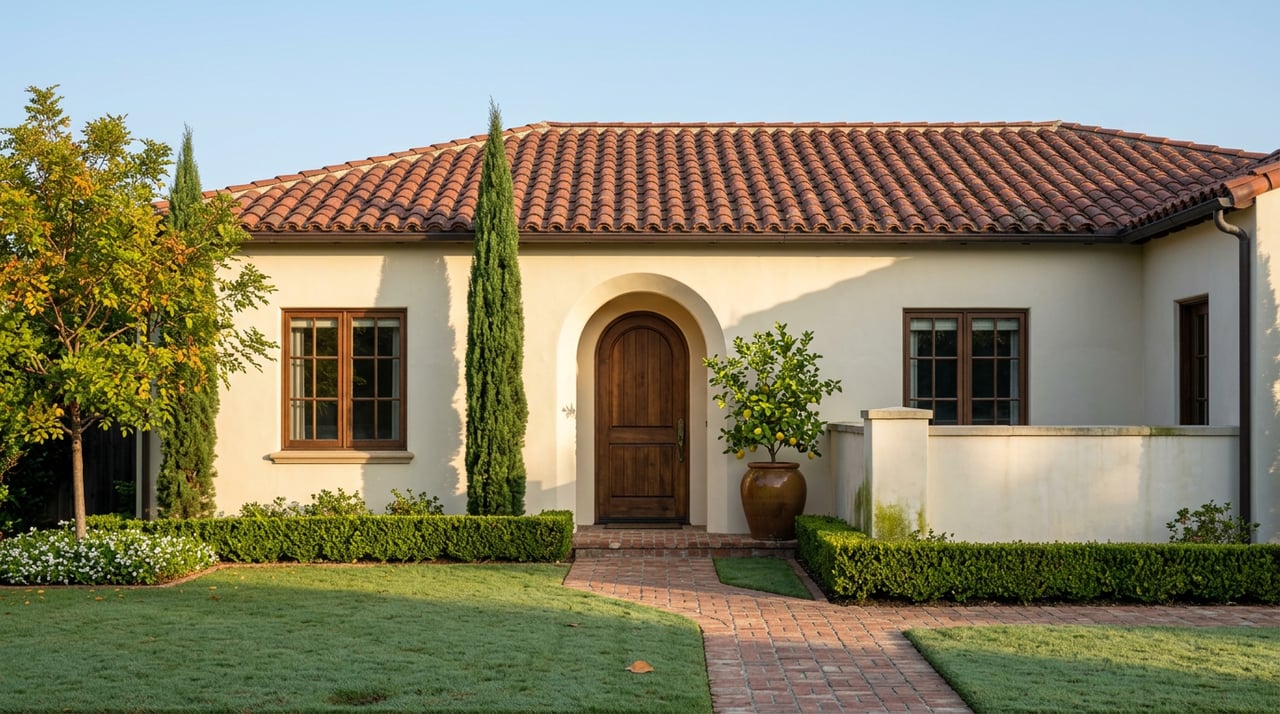
Now look at the southwest, where the opposite math plays out. Stockdale Country Club, one of the established neighborhoods anchoring the corridor, is built around a golf course that traces back to the 1920s, when the property was part of the William Tevis estate. Housing stock there ranges from 1970s and 80s ranch homes to Colonial and Greek Revival influenced properties, some over a century old, sitting on quarter-acre to half-acre lots. Current listings there have run from about $550,000 to just under $1 million, with a recent median somewhere in the $620,000 to $650,000 range. Big, older homes on big, older lots don't usually price out at a premium per square foot. Instead, buyers are paying for square footage itself, not a per-foot markup, which pulls the corridor's overall median price upward even as its price per square foot moves the other way.
So the southwest's rising median isn't proof the corridor got more expensive to build in or buy into. It may simply mean more of the larger, established homes sold relative to the newer, smaller-footprint construction in communities like DR Horton's Village at Gosford or the Beneva Glen master plan, both of which also offer no-HOA options with plans in the 1,500 to 2,800 square foot range.
The Incentive Stack the Median Never Sees
There's a second layer here that matters just as much if you're actually comparing two listings: the median price you see online has no way of showing you what a builder is throwing in to close the deal.
One floorplan at Aspire at Davis Ranch, the Passionflower, listed earlier this year at $515,990 for 2,061 square feet, which works out to almost exactly $250 a square foot, right in line with the northwest's overall price-per-square-foot figure. But that sticker price sits on top of a home with no HOA, a builder warranty, and access to whatever rate buydown or closing-cost credit that community happens to be running that month. A resale home listed at the same total price in an older northwest neighborhood carries none of that. Same number on the sign, very different monthly payment once financing incentives are factored in.
This is the part a median price simply cannot capture. Two homes can share an identical list price and produce two different real costs of ownership, because one of them came with thousands of dollars in financing help attached and the other didn't. If you're only comparing sticker prices between a northwest new-build community and a southwest resale listing, you're not comparing apples to apples. You're comparing a full-price apple to an apple with a coupon stapled to it, and the coupon changes what you'll actually pay every month for the next several years.
What To Ask Before You Compare Two Listings
Before you decide that one corridor is the better value based on price alone, it helps to ask a short list of questions about each specific home:
- Is there a builder incentive attached, such as a rate buydown or closing-cost credit, and what does that do to the effective monthly payment rather than the sticker price?
- Is there an HOA, and if so, what does it cover and what does it cost annually?
- How old is the home, and does its price per square foot reflect new construction, a recent remodel, or original 1970s or 80s systems?
- What's the lot size, and is the home priced for its square footage or for its land?
None of these questions show up in a median price pulled from a portal. All of them show up in the actual numbers on a specific listing, which is where a comparison between corridors actually needs to happen.
The Real Takeaway
Northwest and Southwest Bakersfield aren't moving in opposite directions because one is winning and the other is losing. They're moving in opposite directions because the kind of home selling in each place has shifted, new and compact in one corridor, older and larger in the other, and the incentive attached to a specific new-construction listing can matter more to your monthly payment than which corridor the address happens to sit in.
If you're weighing a move between these two parts of Bakersfield, the median price is a starting point, not an answer. The honest comparison happens listing by listing, once you know what's actually built into the number in front of you.
If you'd like help pulling apart what a specific listing's price is really made of, whether it's a new-construction incentive stack in the northwest or an older, larger lot in the southwest, Carrie Wageman is happy to walk through it with you. Let's Connect.